
English Heritage
English Heritage care for over 400 historic places in England. These provide some really interesting places to walk to that help bring the past alive for children. Our collection includes walks to ruined palaces, priories, abbeys, castles and even a Roman city - all of which are free to enter.
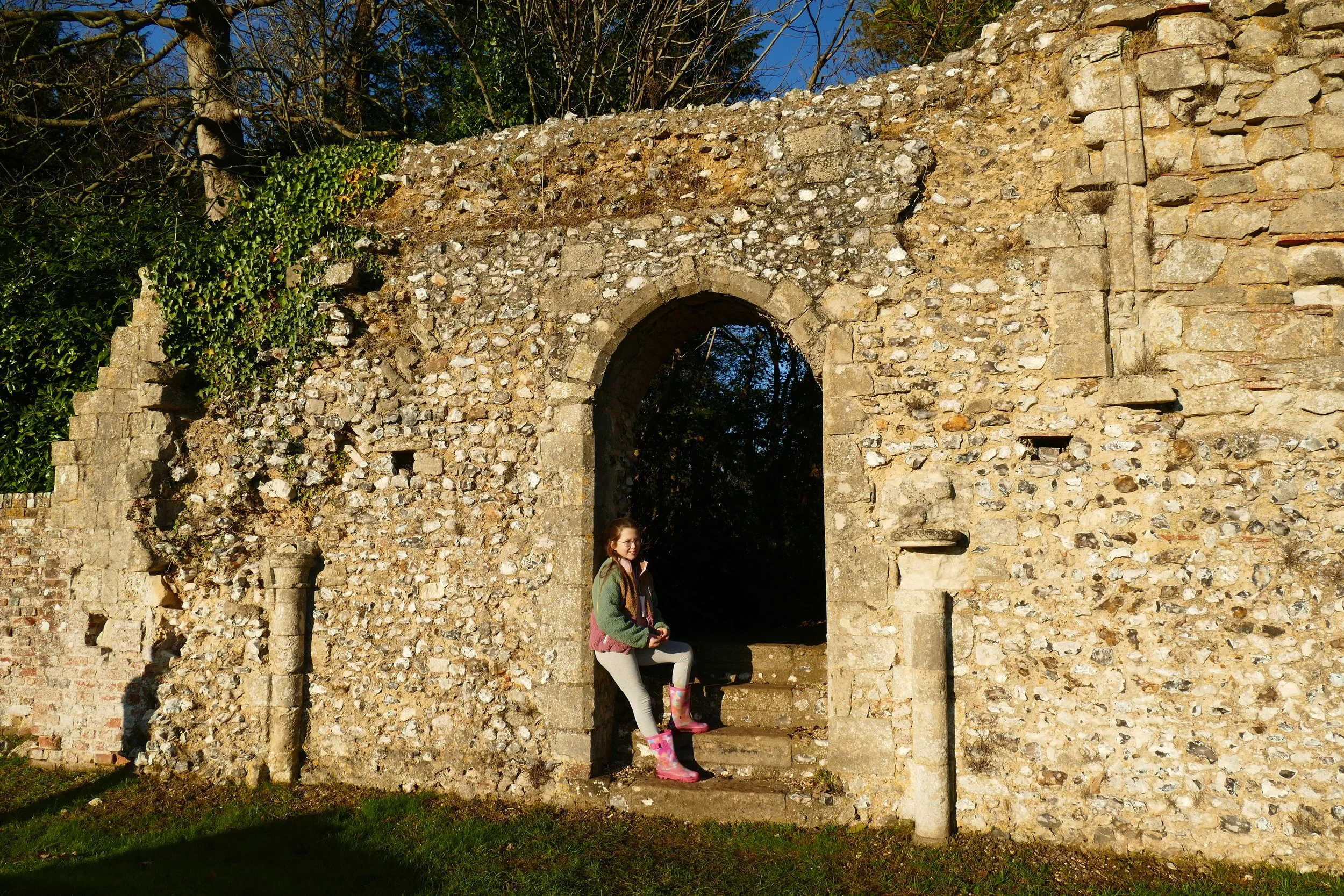
On a walk around the pretty village of Southwick, you can visit the ruins of this Augustin Priory. Only one wall remains, but the walk also includes a tea room and a little play area.
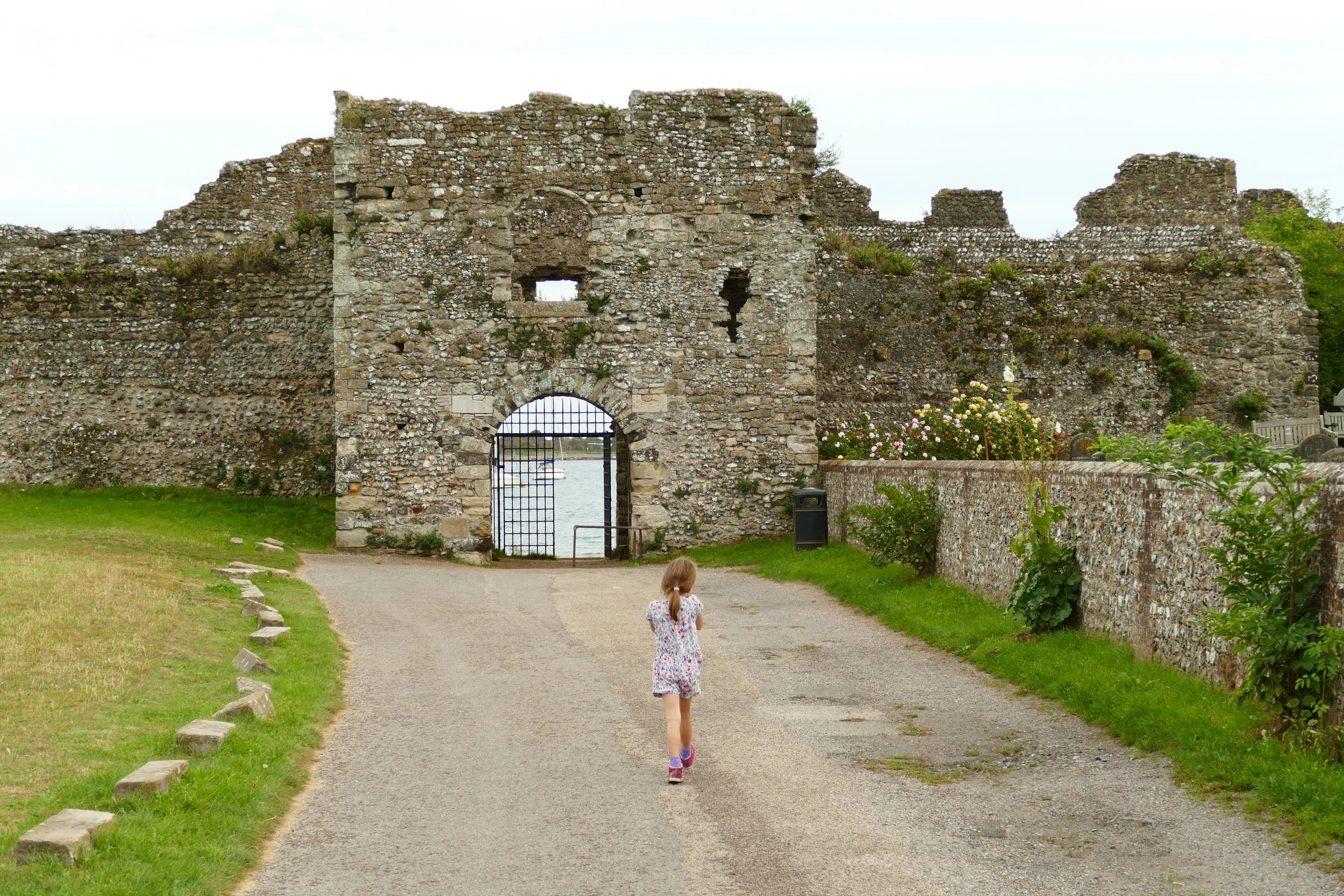
You need to buy a ticket to visit the Norman castle keep, but the rest of the grounds are free to explore. The castle has a commanding position over The Solent and you can use it as the starting point for a linear shoreline walk with a choice of cafes and parks to visit.
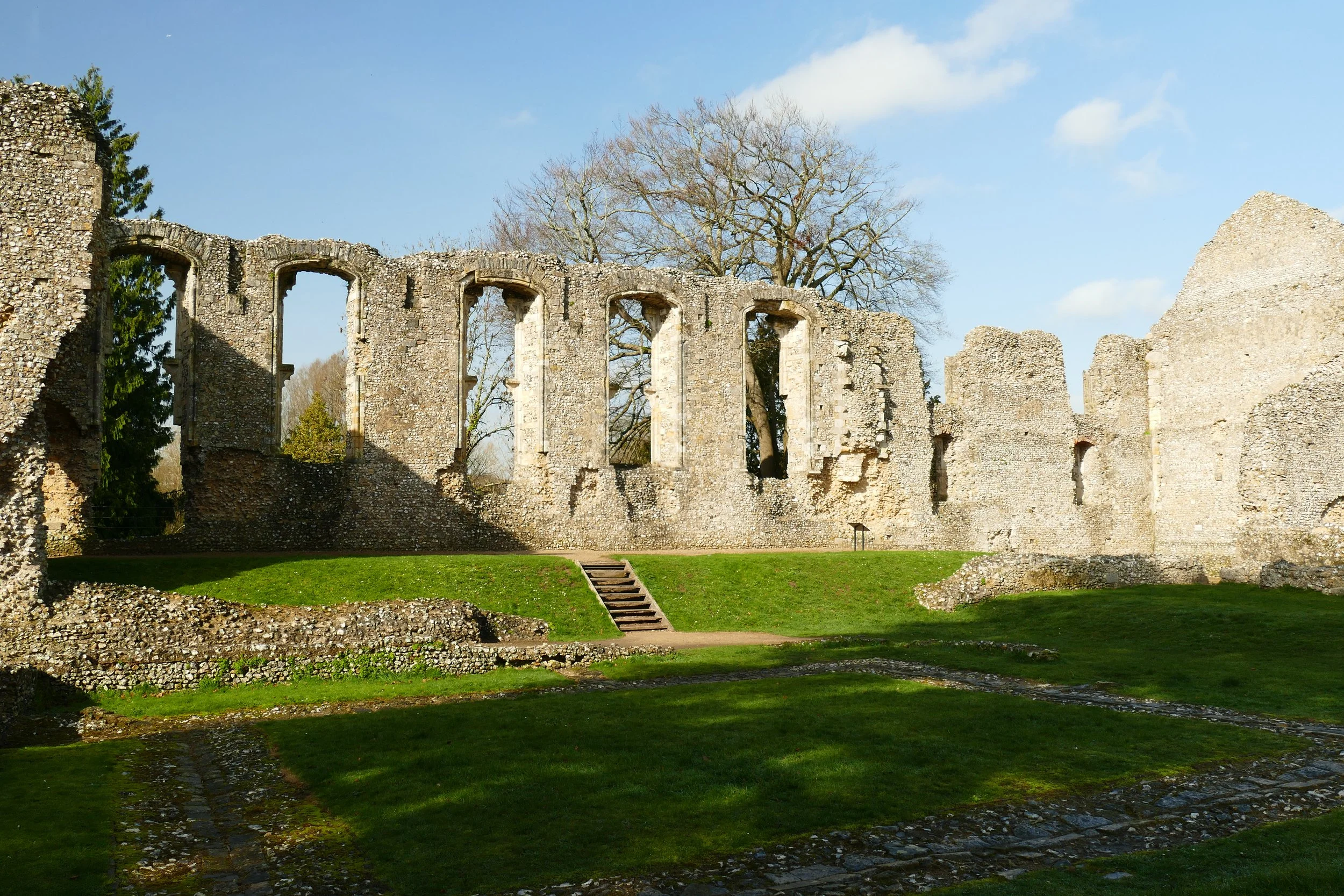
These well preserved 12th and 14th century ruins stand on the edge of the town centre and make a lovely setting for a family picnic. From the ruins, you can follow our walk to the river and then through a peaceful nature reserve.
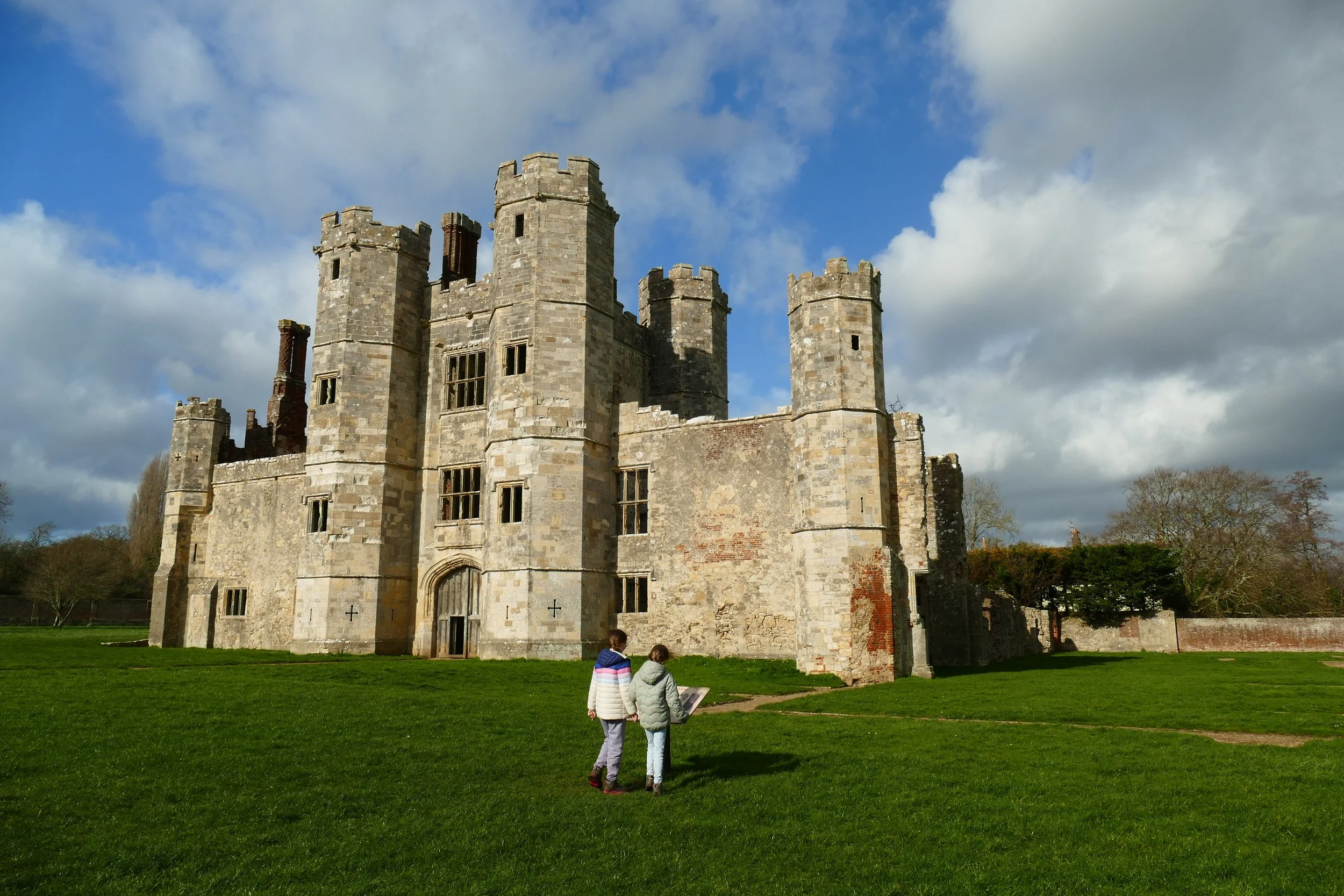
On this walk you can explore the ruins of a 13th century Premonstratensian abbey, which was later converted into a Tudor mansion. The walk starts from the pretty village of Titchfield with timber-framed houses and also includes a popular play area.
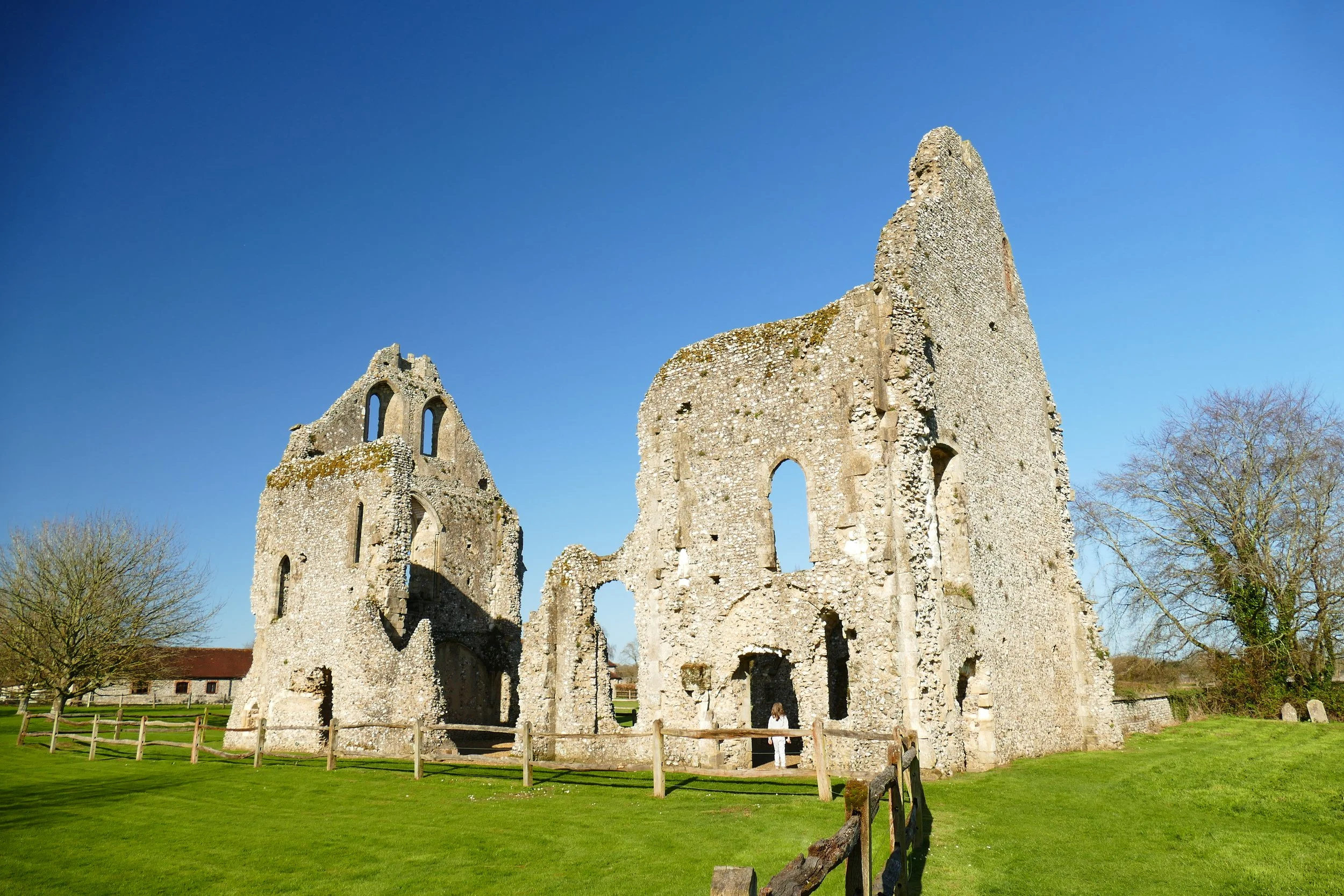
Ordinarily, the remains of a Benedictine priory would be the star of the show one one of our walks, especially in its setting beside a 12th to 14th century monastic church. However, with so much else to see on this walk including the iconic hilltop windmill, it can sometimes be overlooked. Our route makes sure you see everything!

This impressive building is set beside a lake and is England’s foremost example of Greek Revival architecture. You can’t go inside the building, but you can explore the grounds and then follow our walk over the Candover Brook and through the surrounding countryside.
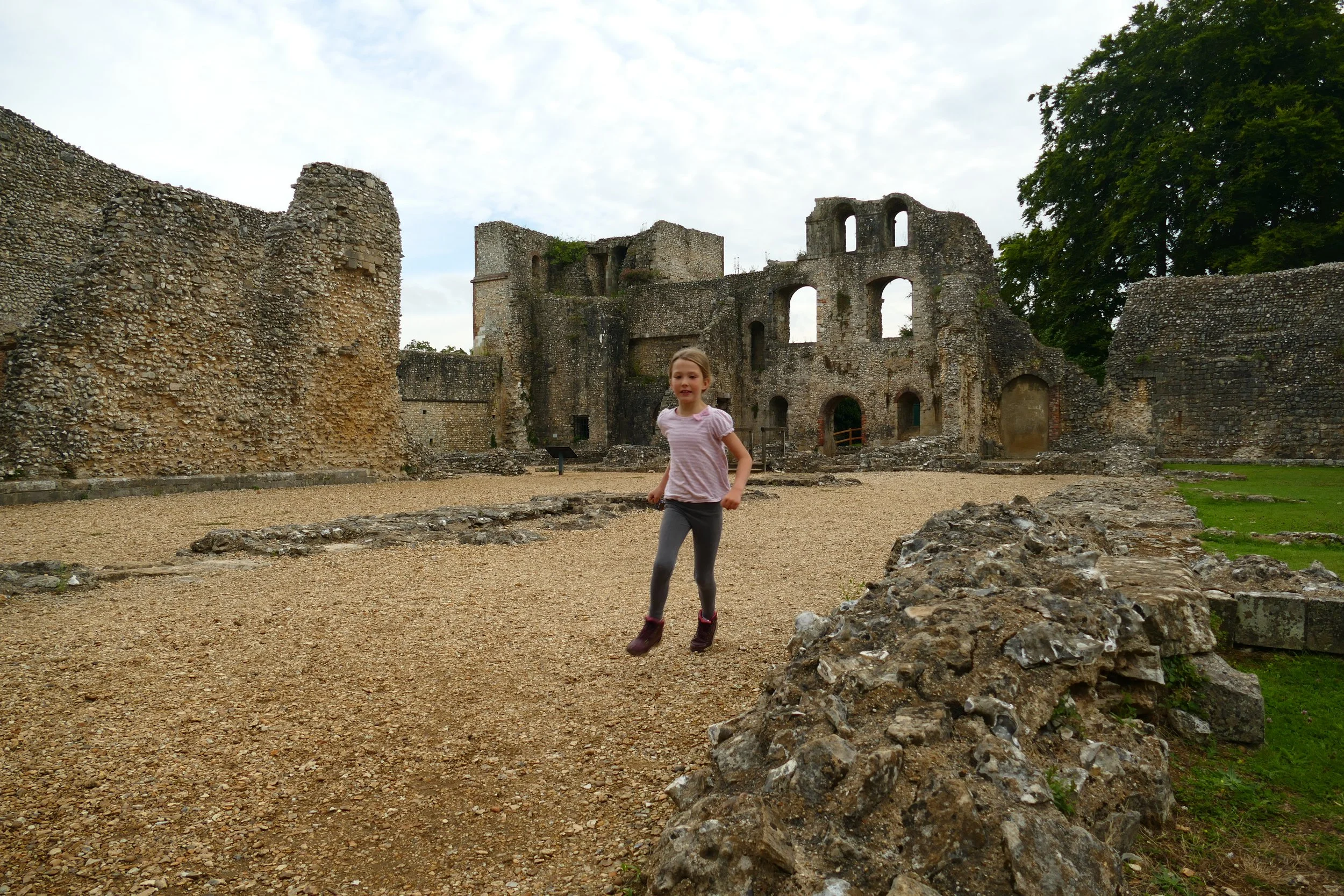
The Medieval Bishops of Winchester would have resided in this fine property and the ruins provide just one of the many sights on this walk around the water meadows of Winchester. You will also see St. Catherine’s Hill, The River Itchen, Hockley Viaduct, Hospital of St. Cross, Winchester College, Winchester Cathedral and The City Watermill.
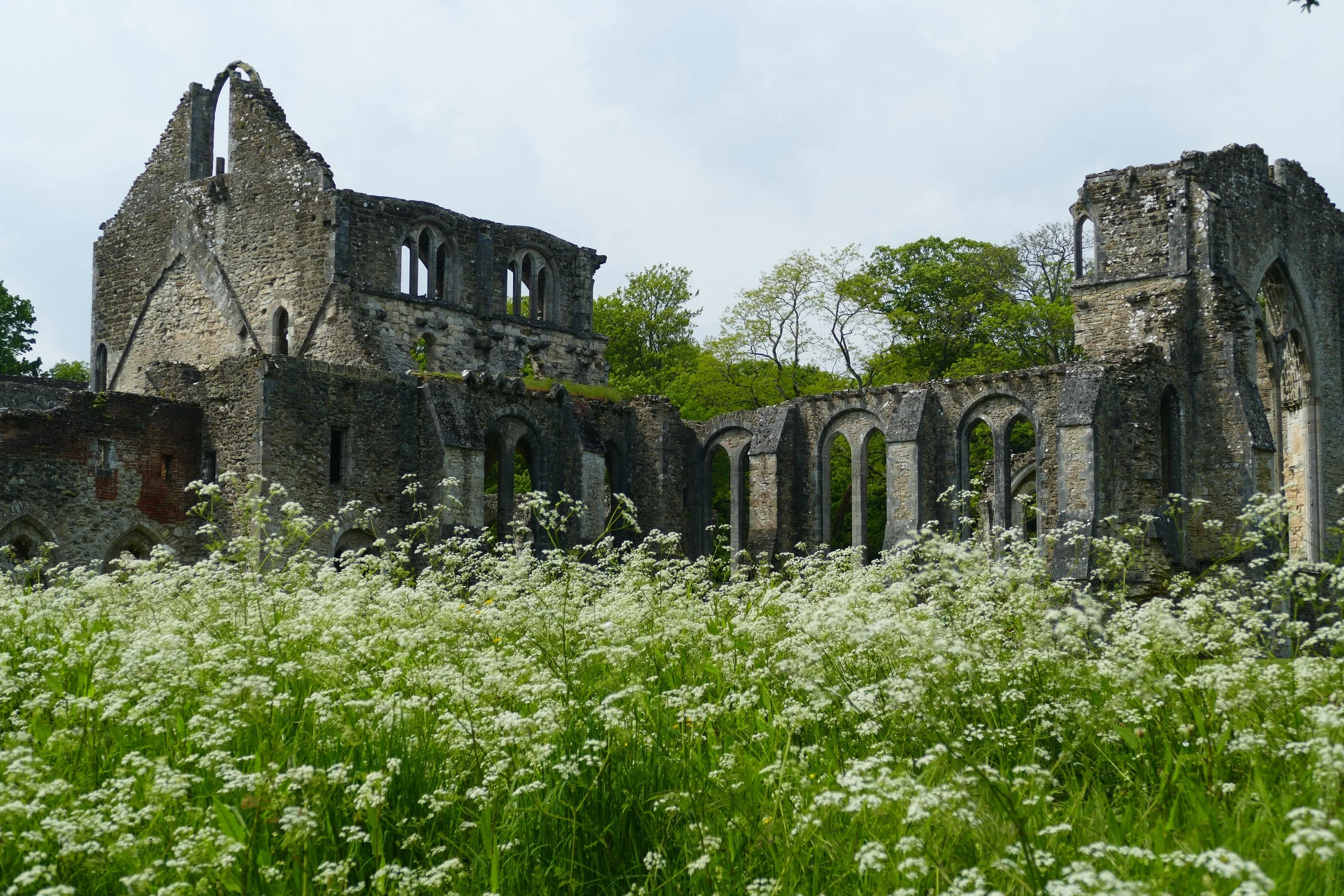
Starting from a shoreline play area, this walk follows Southampton Water before turning inland through Westwood Woodland Park, which is full of bluebells in April. The walk ends at Netley Abbey, the most complete surviving Cistercian monastery in southern England. It’s the perfect place for an end of walk picnic.
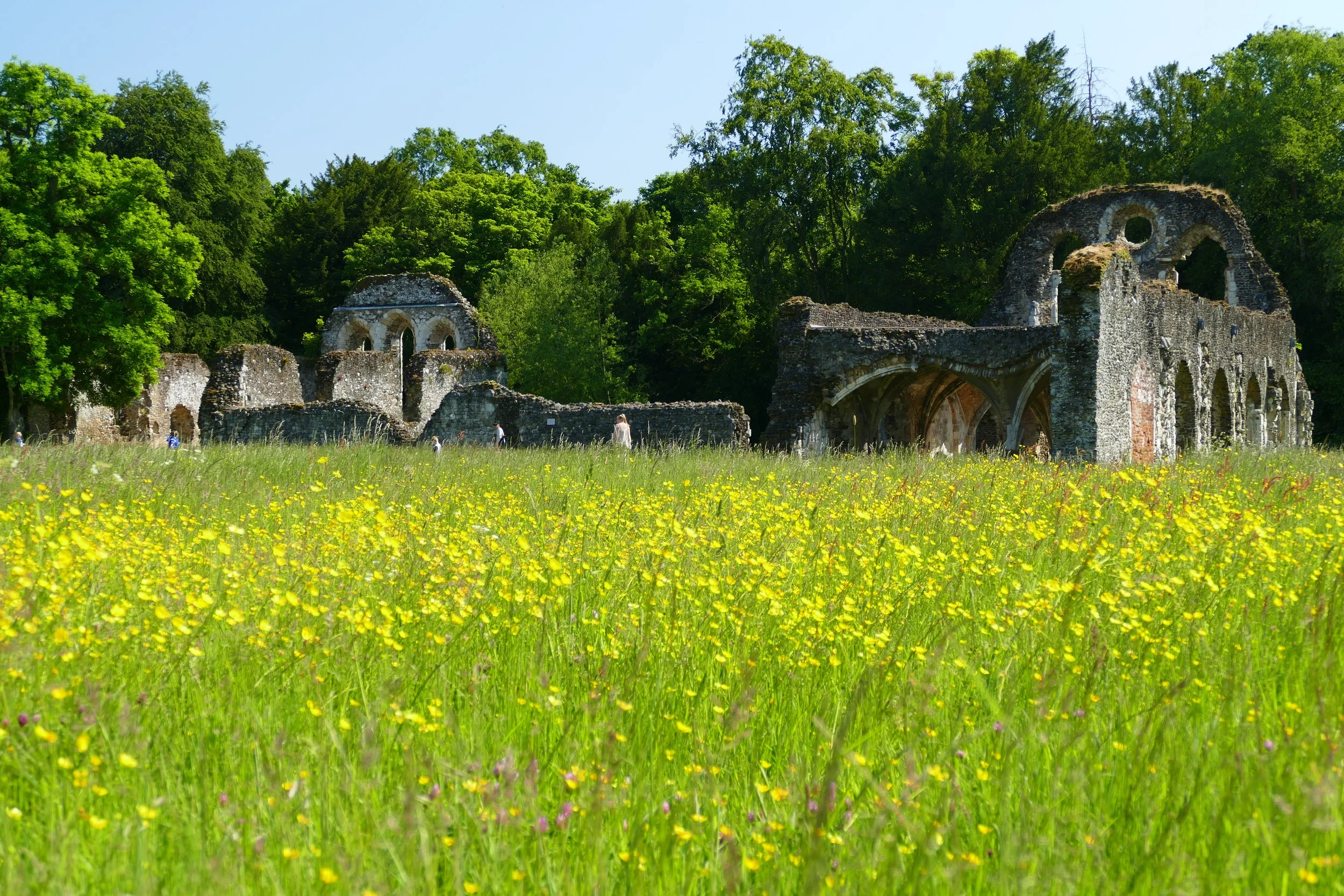
The ruins of Waverley Abbey, the first Cistercian abbey in England, lie on the edge of a meadow beside the River Wey. It is an utterly delightful spot that can be reached on a linear walk from the village of Tilford with it’s village green and a bridge where children can play in the river.
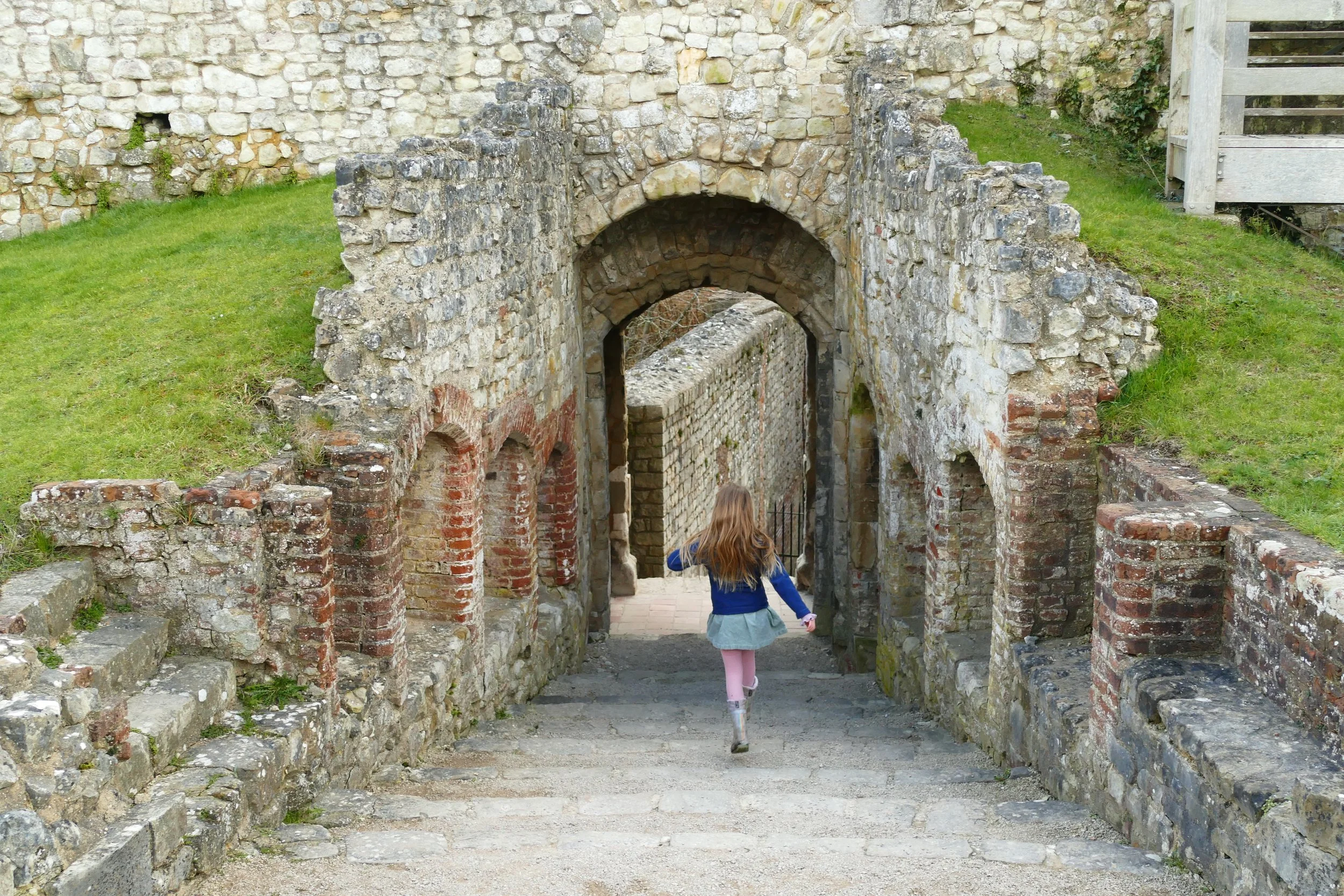
Farnham Castle Keep has an impressive position overlooking the town. There are viewing platforms and walkways that help you make the most of those vistas. Below the keep is Farnham Park, a public space that utilises what was once the deer hunting park and is now home to one of our favourite adventure play areas.
Note: The castle keep is currently closed to the public.
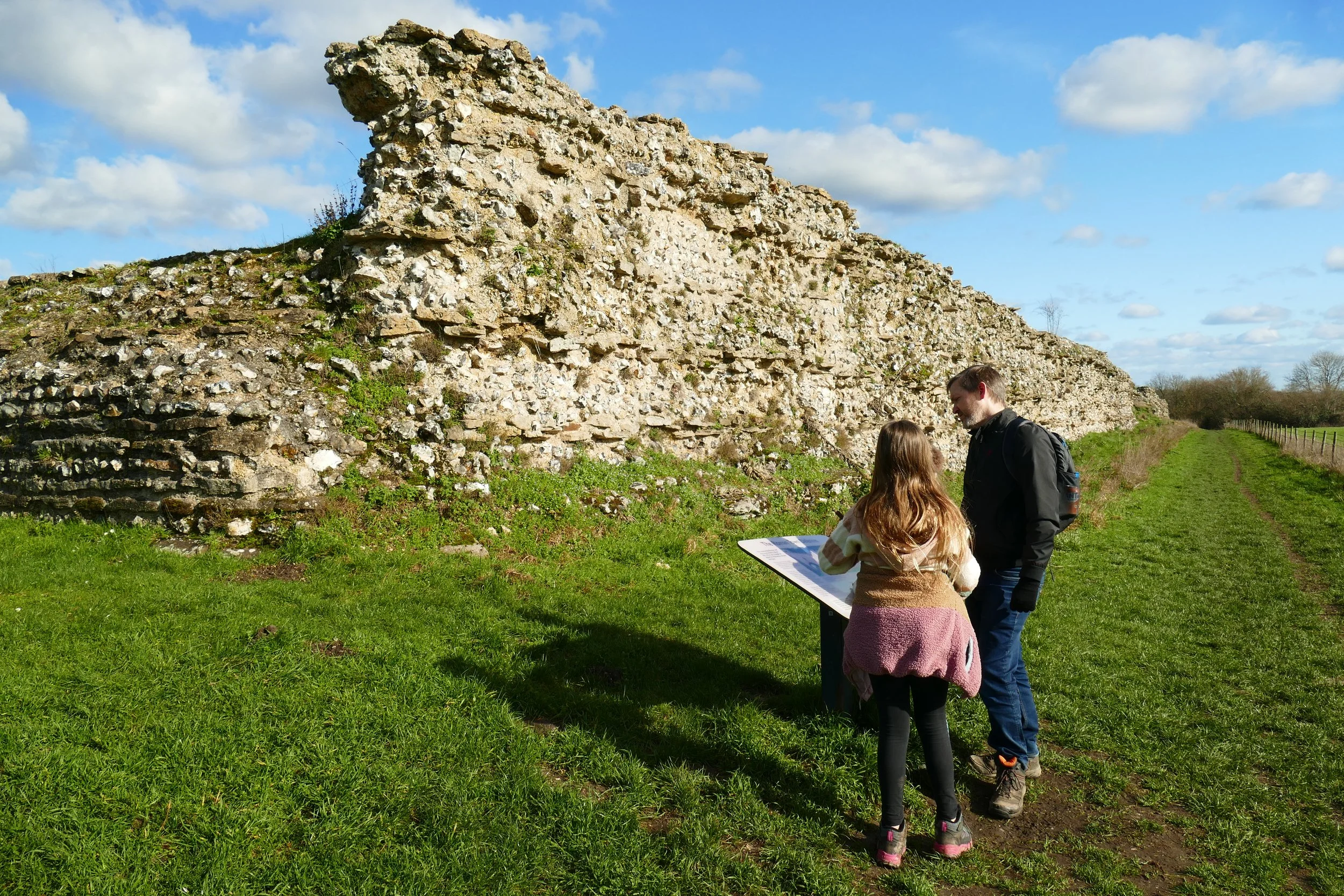
In the very north of Hampshire, you will find the oldest ruins in this collection: the walls of a Roman town and a Roman amphitheatre. There is an easy, circular walk which will take you around the circumference of the site. Children will love playing at being gladiators in the amphitheatre.